Why developing nations hold the key to the WTO’s digital future


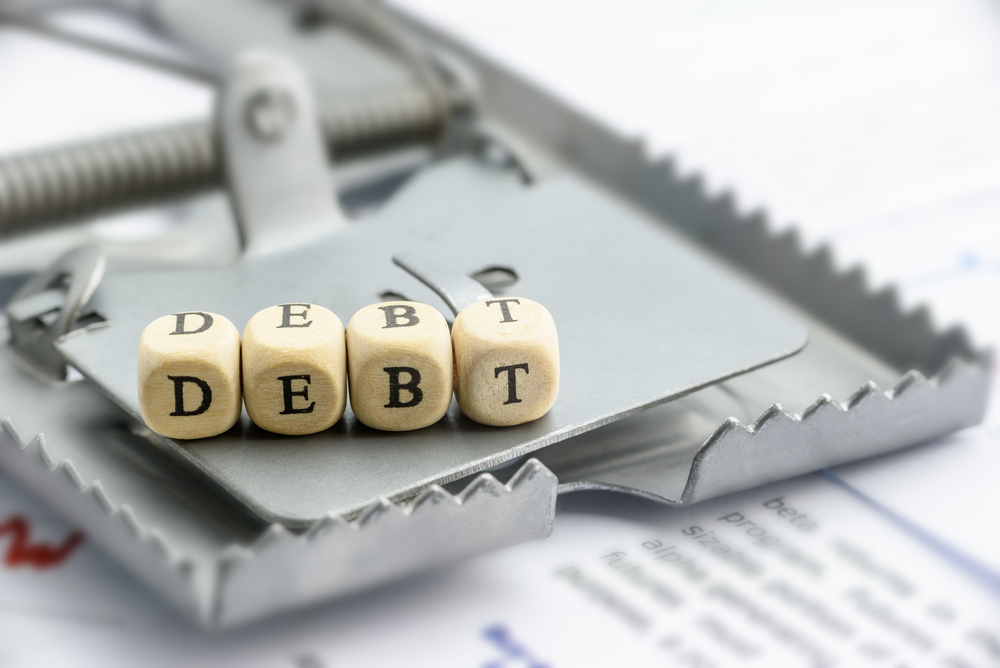
Africa’s debt crisis is back in the headlines. From Zambia to Ghana, sovereign defaults are mounting. Debt-to-GDP ratios in more than half of African countries have breached prudent thresholds. And yet, the continent needs $1.3–1.6 trillion to meet the Sustainable Development Goals (SDGs) and the African Union’s Agenda 2063. The paradox is stark: borrow more and risk collapse, or borrow less and accept stagnation.
Is debt a trap—or the only realistic development tool Africa has left?
The caricature of Africa as a continent drowning in Chinese loans is outdated. External debt is only half the story. Domestic debt has exploded since 2008, now accounting for up to 60 % of public debt in some countries. Commercial creditors—bondholders, oil traders, commodity financiers—have replaced Paris-Club governments as Africa’s primary lenders. Interest-rate risk has shifted from concessional to market-rate, and from foreign-currency to local-currency—but the cost has not fallen. Average coupons on 10-year Eurobonds issued by African sovereigns have risen above 9 %, roughly double the level in 2013.
The result: debt service is cannibalising budgets. In 2021 African governments spent 4.8 % of GDP on interest payments—the same share they devoted to education, and almost twice the share spent on health.
The simple answer is that domestic resources are not enough. Africa’s 33 Least Developed Countries (LDCs) generate <1 % of global GDP despite housing 10 % of the world’s population. Tax-to-GDP ratios hover around 15 %—half the level in emerging Asia. Commodity price shocks, COVID-19, and climate disasters have erased hard-won fiscal space. When revenues collapse, borrowing becomes the only way to keep schools open, clinics stocked, and infrastructure functioning.
But there is a second, strategic motive: debt as a growth catalyst. Well-designed infrastructure can raise potential GDP and self-liquidate through higher future tax receipts. Ethiopia’s $4 billion Addis–Djibouti railway, financed largely by external loans, cut logistics costs by 30 % and lifted manufactured exports by 25 % within five years. The problem is not the instrument—it is the absence of a strategy that links every dollar borrowed to a measurable growth dividend.
Three design flaws keep turning African debt from tool to trap:
Africa does not need a new HIPC; it needs new contracts that align repayment with development outcomes. Four innovations are already being piloted:
Domestic borrowing can eliminate currency risk and deepen local capital markets—but only if managed prudently. Nigeria’s pension funds now hold 70 % of federal bonds; crowding-out is real, with private-sector credit growth falling below inflation for five straight years
. Policy fixes include:
The G20 Common Framework, conceived in 2020, was supposed to replicate HIPC speed and scale. Three years on, only four countries have applied; Zambia’s official-creditor committee took 18 months to agree on terms
. The bottlenecks:
The Bridgetown Initiative (proposed by Barbados) and the UN Secretary-General’s SDG Stimulus offer a bolder template:
African finance ministers should replace “how much can we borrow?” with “what is the return on each borrowed dollar?” A practical checklist:
Project stage | Key question | Metric |
Appraisal | Does the project raise GDP ≥ 2× interest cost? | EIRR > WACC + 200 bps |
Contracting | Is ≥ 30 % of exposure in local currency or inflation-linked? | FX share falling |
Disbursement | Are coupons contingent on verified milestones? | KPI-linked tranches |
Repayment | Is at least 20 % of service linked to exports or GDP? | DSA stress-test passed |
Multilateral banks can de-risk innovative instruments by providing first-loss guarantees; regulators (Basel, IOSCO) should assign lower risk weights to development-linked securities; and credit-rating agencies must embed state-contingent clauses into their definitions of default.
Conclusion: Debt as Option Value
Debt is neither sin nor salvation—it is an option on the future. Priced correctly and structured flexibly, it allows today’s low-income countries to compress the 30-year infrastructure trajectory of today’s OECD states into a single decade. Priced punitively and structured rigidly, it becomes a reverse lottery that transfers wealth from the poorest citizens to the richest creditors.
Africa’s choice is not whether to borrow, but how to borrow smartly. The continent can break the cycle of panic and forgiveness only by shifting from sovereign guarantees to cash-flow contracts, from crisis committees to automatic stabilisers, and from debt sustainability to development sustainability.
The next default is preventable—but only if lenders and borrowers alike treat debt as what it can be: the most powerful development tool we have, once we redesign it for the 21st century.
References
: UN OSAA, Unpacking Africa’s Debt, Nov 2024
: UN DESA, Tackling Domestic Debt Sustainability, Apr 2024
: UNECA, Rising Debt Burden in Africa’s LDCs, Nov 2024
: Afreximbank, State of Play of Debt Burden in Africa 2024, 2024
Stay connected with IPRA’s quarterly newsletter featuring the latest news, book releases, and original content.
Copyright © 2025 Institute of Policy Research and Analysis. All rights reserved.