From FarmBots to Fintech: How AI Could Transform African Economies

Share This :

Across Africa, artificial intelligence is no longer a distant promise—it is a present-day toolkit being deployed in fields and finance alike. From solar-powered weed-zapping robots in Rwanda to Swahili-speaking banking chatbots in Nairobi, AI applications are quietly rewriting the continent’s economic script. Below, we explore how two seemingly disparate domains—agriculture and financial services—are converging around AI to raise productivity, deepen inclusion, and ultimately reposition Africa inside global value chains.


  1. The macro picture: A $2.9 trillion opportunity

AI could add USD 2.9 trillion to Africa’s GDP by 2030—roughly the size of today’s entire French economy—while generating 230 million digital jobs in Sub-Saharan Africa alone. Three forces make this plausible:

  • Demographic dividend: 60 % of Africans are under 25 and own 375 million unique mobile-phone subscriptions—an ideal data-generating base.
  • Leapfrog infrastructure: Cloud, mobile money and low-cost satellites let AI skip legacy bottlenecks (branches, grid, landlines).
  • Policy momentum: 25 regulatory sandboxes in 15 countries now give start-ups safe space to test AI models.


  1. FarmBots and algorithms: Re-engineering agriculture

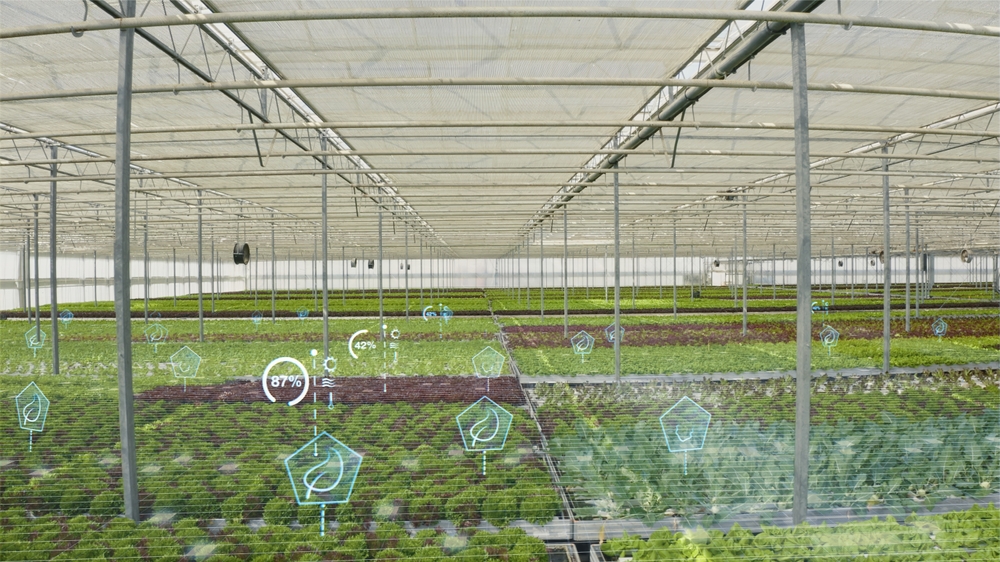
Agriculture still employs >60 % of the workforce and supplies 23 % of continental GDP, yet average cereal yields are barely one-third of the global mean. AI is attacking the inefficiency on four fronts:

  1. a) Precision mechanization
  • Hello Tractor (Nigeria) uses an AI dispatch engine to queue, route and price tractor services for 650 k smallholders, raising mechanization rates by 25 %.
  • Aerobotics (South Africa) flies AI-guided drones that scan 11 million citrus trees, spotting pest damage weeks before the human eye.


  1. b) Predictive credit and insurance
  • Apollo Agriculture (Kenya) fuses satellite biomass indices with phone-based psychometric tests to generate credit scores in minutes; repayment rates exceed 92%.
  • Pula insures 20 million smallholders in Kenya, Rwanda and Zambia. Its AI ingests 30 years of rainfall data plus real-time satellite imagery; $120 million in automated payouts have already cushioned climate shocks

.

  1. c) AI-Powered weeding and input savings

In Ghana, “FarmBots” built by local engineers use computer-vision cameras to distinguish maize seedlings from weeds, cutting herbicide use by 40% and raising yields 30 %—all on solar power

.

  1. d) Market intelligence

Nigerian agritech Agriple scrapes WhatsApp group chats, commodity prices and transport data to predict village-level tomato gluts or shortages three weeks ahead, letting farmers time harvests and negotiate better prices.


  1. Fintech’s AI flywheel: From scoring to conversational banking

While farms get smarter, finance is racing toward invisible, inclusive and instant services. Four breakthrough patterns stand out:


  1. a) Alternative Credit Scoring
  • Tala (Kenya) analyses 300 mobile-behavior signals—airtime purchases, contact regularity, app usage—to underwrite the unbanked; average first loan is $30, disbursed in <2 minutes.
  • Jumo’s platform operates in six countries, issuing 90 million micro-loans; ML models cut default rates by 18 % versus traditional scorecards.
  1. b) Multilingual conversational agents

Nigeria’s Kudi.ai and South Africa’s Absa Abby handle 3 million customer queries a month in Yoruba, Hausa, isiZulu and English, shaving 40 % off call-center costs while boosting NPS (Net Promoter Score) by 25 points.

  1. c) Cross-border and remittance efficiency

AI-driven AML/transaction-monitoring reduces false positives by 35 %; combined with blockchain settlement, average intra-African remittance costs have fallen from 12% to 5% since 2022.

  1. d) Sector-specific financing
  • 10mg (Nigeria) fast-tracks loans to rural pharmacies and clinics, using AI to read drug-inventory turnover and NHIS claims data; approval time drops from weeks to 24 hours.
  • M-KOPA has embedded AI in pay-as-you-go solar devices; the same data trail is now recycled to unlock $1.5 billion in follow-on credit for school-fee loans and e-bikes.


  1. The feedback loop: When farm meets finance

The real power lies in closing the loop between soil and wallet:

  1. IoT soil sensors → agronomic advice → higher yields → verifiable harvest data.
  2. Harvest data → trusted cash-flow record → instant credit or insurance premium rebate.
  3. Cheaper credit → ability to buy better seed, drone services or irrigation kits → still higher yields.

Mastercard’s 2025 whitepaper labels this “data collateral”—turning on-farm signals into bankable risk metrics that can unlock $40 billion in latent credit demand across smallholder Africa.


  1. Risks and guardrails
  • Data asymmetry: Foreign cloud providers host >70 % of African agronomic and transaction data; sovereignty questions loom.
  • Model bias: Algorithms trained on male-dominated phone records can under-score women farmers; audits must be mandatory.
  • Energy: AI inference in off-grid villages still depends on diesel generators; coupling models with solar mini-grids is critical.
  • Job displacement: While AI creates digital gigs, routine teller and extension-worker roles may shrink; reskilling funds are essential.


  1. Action plan for policymakers and investors
  2. Open Farm & Finance Data: Publish anonymized weather, price and transaction streams to lower start-up training costs.
  3. Pan-African AI Commons: Pool GPUs and curated data sets—similar to CERN for particle physics—accessible to universities and SMEs.
  4. Green-AI Clause: Tie subsidized cloud credits to renewable-energy hosting, nudging data centers toward hydro and solar.
  5. RegTech Bridge: Harmonize AI governance rules between central banks and agriculture ministries to allow cross-sector data use.
  6. Gender-smart Incentives: Offer co-investment grants for models whose training data is ≥40 % female-generated.


  1. Bottom line

Africa’s economic future will not be forged in a single steel plant; it will be compiled line-by-line in Python notebooks that predict rainfall, price cassava and underwrite a first-time borrower—all in real time. Whether embedded in a solar weeding robot or a voice banking bot, AI is becoming the language that translates Africa’s immense data exhaust into productive capital. The continents that master this translation first will write the next chapter of global growth—and Africa, armed with fertile fields and a youthful, mobile population, is already compiling the code.


Sources

Africa’s AI Market Set to Quadruple by 2030, Fintech News Africa, 15 Sept 2025.

Africa’s Fintech Growth: How AI is Revolutionizing…, LinkedIn, 2 Feb 2025.

Harnessing the Transformative Power of AI in Africa, Mastercard, Aug 2025.

How Artificial Intelligence-Powered Weeding Is Transforming Africa’s Agricultural Future, AUDA-NEPAD, 19 Sept 2024.

How AI Could Reshape African Fintech and Attract Investment, LinkedIn, 28 Feb 2025.

Artificial Intelligence Catalysing a New Era of Fintech Investment in Africa, FurtherAfrica, 4 Mar 2025.

AI in Agriculture: Sustainable Solutions for Africa’s Growth, Agribusiness Academy, 9 May 2025.

Crypto, Fintech, Agritech & AI: Africa’s Most Promising Sectors in 2025, Tech in Africa, 4 Aug 2025.

We are a leading independent, nonpartisan research organization dedicated to advancing evidence-based policy solutions for sustainable economic development in Africa.

Subscribe to our Newsletter

Stay connected with IPRA’s quarterly newsletter featuring the latest news, book releases, and original content.

Copyright © 2025 Institute of Policy Research and Analysis. All rights reserved.