Why developing nations hold the key to the WTO’s digital future


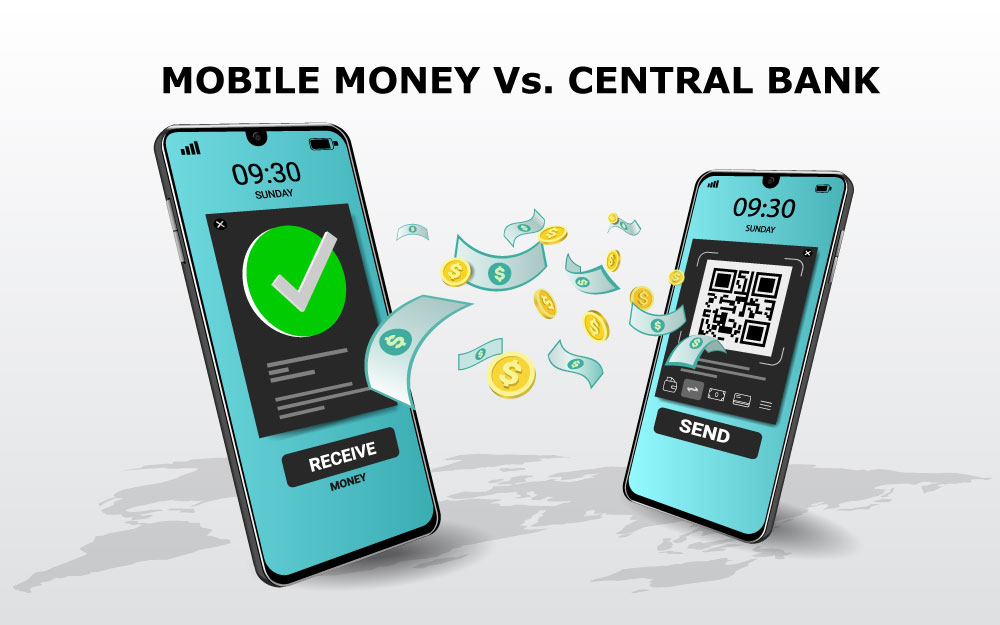
Across Africa, the mobile phone is no longer just a tool for communication—it is a bank branch in your pocket. From the savannahs of Kenya to the markets of Lagos, mobile money has revolutionized how people save, spend, and send money. But as its influence grows, so does a critical question: Who should control Africa’s financial future—mobile money platforms or central banks?
The rise of mobile money: A quiet revolution
In Sub-Saharan Africa, 33% of adults now use mobile money accounts, a dramatic leap from just 12% in 2014. Services like M-PESA in Kenya have become household names, enabling millions to access financial services without ever stepping into a bank. Mobile money has reduced transaction costs, increased financial inclusion, and empowered women and rural populations.
This success is largely due to the agile, private-sector-driven model of mobile money. Telecom companies like Safaricom and MTN built vast agent networks and user-friendly platforms, often faster and more effectively than traditional banks. In countries like Ghana, mobile money interoperability has further fueled growth, allowing users to transact across networks seamlessly.
Central banks enter the digital space
Not to be outdone, central banks across Africa are exploring or piloting Central Bank Digital Currencies (CBDCs)—digital versions of national currencies. Nigeria launched the eNaira in 2021, while South Africa and Ghana are testing wholesale and retail CBDCs respectively. The motivations are clear: enhance financial inclusion, improve payment efficiency, and maintain monetary sovereignty
.
CBDCs offer central banks a way to regain control over the digital payment ecosystem, which is increasingly dominated by private mobile money providers. They also promise greater transparency, lower remittance costs, and better oversight of capital flows—a growing concern in a region with high informality and cross-border trade.
The Tension: Innovation vs. Regulation
Mobile money’s rapid expansion has outpaced regulation, raising concerns about consumer protection, data privacy, and financial stability
. Central banks often view mobile money as a “shadow banking” system, operating outside traditional oversight mechanisms. For instance, while mobile money accounts are not bank accounts, they hold customer funds in trust accounts at commercial banks—a gray area in regulatory terms.
In response, regulators have introduced agent banking rules, transaction limits, and interoperability mandates. However, overregulation risks stifling innovation, especially in markets where mobile money is the only financial lifeline.
The Case for Collaboration, Not Competition
The future of Africa’s financial system doesn’t have to be a zero-sum game. Mobile money and CBDCs can coexist and complement each other. CBDCs could provide a public, low-cost digital infrastructure, while mobile money platforms could serve as the distribution and customer engagement layer.
For example, two-tier CBDC models—where central banks issue digital currency but rely on private intermediaries like mobile money operators for distribution—are gaining traction. This approach preserves the innovation and reach of mobile money, while ensuring public oversight and interoperability.
Who Should Control the Future?
The answer lies not in who controls, but in how they govern. Central banks must evolve from gatekeepers to enablers, creating regulatory sandboxes and open APIs that allow mobile money to innovate safely
. At the same time, mobile money providers must embrace transparency, interoperability, and consumer protection as core principles—not afterthoughts.
Africa’s financial future should be inclusive, resilient, and digitally empowered. That future will not be built by mobile money or central banks alone—but by a shared vision of financial ecosystems that work for everyone.
Key Takeaways
Mobile Money | Central Banks |
Agile, user-centric, private-sector driven | Stable, regulated, public-interest focused |
High adoption, especially among the unbanked | Exploring CBDCs to modernize payment systems |
Faces regulatory uncertainty | Struggling to keep pace with innovation |
Needs better consumer protection and oversight | Must embrace innovation and collaboration |
Bottom line: Africa doesn’t need a financial king—it needs a coordinated financial ecosystem where mobile money and central banks play to their strengths. The real winner will be the millions of Africans who finally have a seat at the financial table.
References
Canuto, O., & Ghazi, T. (2023). Central Bank Digital Currencies in Africa. https://www.cmacrodev.com/central-bank-digital-currencies-in-africa/
Ricci, L. A., et al. (2025). Digital Payment Innovations in Sub-Saharan Africa. IMF. https://www.imf.org/en/Publications/Departmental-Papers-Policy-Papers/Issues/2025/06/27/Digital-Payment-Innovations-in-Sub-Saharan-Africa-529198
Osabutey, E. L. C., & Jackson, T. (2024). Mobile money and financial inclusion in Africa. Technological Forecasting and Social Change. https://www.sciencedirect.com/science/article/pii/S0040162524001355
Carnegie Endowment. (2024). Security and Trust in Africa’s Digital Financial Inclusion Landscape. https://carnegieendowment.org/research/2024/03/security-and-trust-in-africas-digital-financial-inclusion-landscape
Suri, T., et al. (2023). Mobile Money. VoxDevLit. https://voxdev.org/sites/default/files/2023-09/Mobile_Money_2.pdf
Stay connected with IPRA’s quarterly newsletter featuring the latest news, book releases, and original content.
Copyright © 2025 Institute of Policy Research and Analysis. All rights reserved.