- The promise that won’t deliver
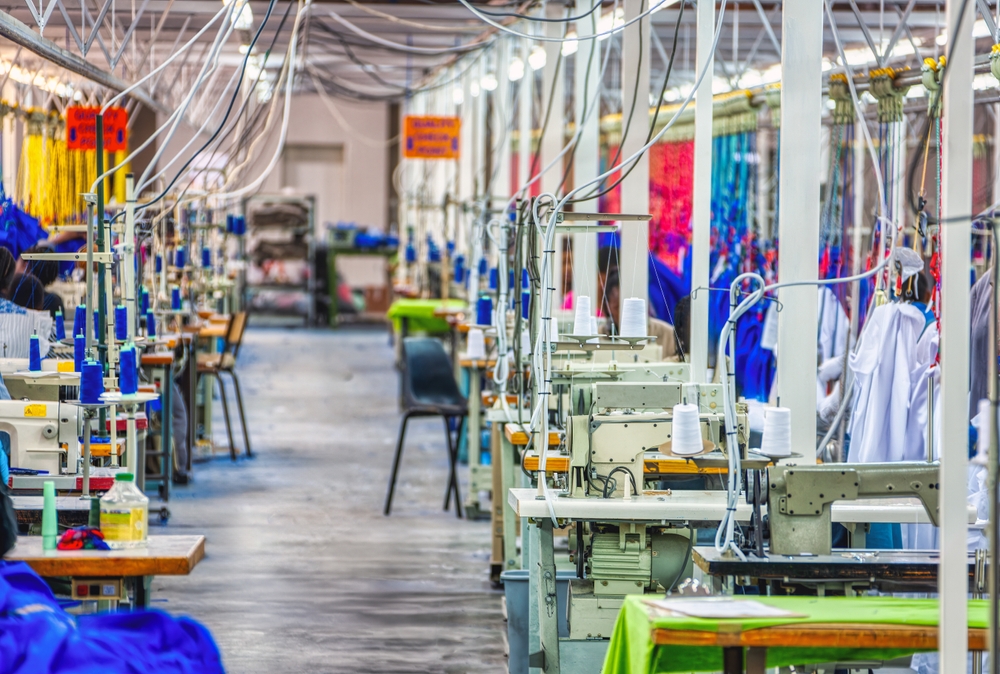
From the Lagos skyline to the Special Economic Zones outside Addis Ababa, every new factory opening is photographed like a moon landing. Politicians cut ribbons, development banks issue glossy brochures, and the headline is always the same: “Africa is industrialising.” Yet, fifteen years later, the share of manufacturing in African GDP has fallen from 13% (2005) to 11% (2022). Ethiopia’s flagship Hawassa Industrial Park—built with USD 1 billion of public money—still imports its buttons, zippers and even the plastic bags that wrap each finished pair of jeans. The promise of “Made in Africa” keeps being renewed, but the product keeps being “Assembled in Africa with 72% Chinese, Vietnamese or Turkish inputs.”
- The four traps that kill industrial policy
Trap 1: The Input-Substitution Mirage
Governments subsidise cement, steel or fertiliser plants on the assumption that “if we produce it at home we save foreign exchange.” The moment the currency weakens or energy prices spike, the plant becomes a ward of the finance ministry. Nigeria’s cement sector—protected by a 60 % tariff—now sells cement at USD 9–11 a bag, double the world price, making housing unaffordable and construction jobs scarce.
Trap 2: The “Lonely Factory” Problem
A single Taiwanese textile mill is airlifted into an industrial park, promised zero tax and 24-hour electricity. Nobody asks who will knit the fabric, weave the labels, print the tags or recycle the scrap. Without a cluster, the mill’s true unit cost is 18–22 % higher than in Ho Chi Minh City, even after the subsidy.
Trap 3: The Missing Middle of Capable Firms
Industrial policy is written for firms that do not yet exist. Africa has almost no tier-2 suppliers—companies that make motors, ball-bearings, dyes, packaging film or precision metal parts. The continent therefore imports USD 50 billion of “intermediate goods” every year that Southeast Asia produces in-house. You cannot build a car if you have to import the screws.
Trap 4: The Political-Economy Doom Loop
Subsidy programmes are designed to be captured. A 2022 audit of Ghana’s 1-District-1-Factory initiative found that 62 % of beneficiary firms were less than six months old, had no audited accounts, and were co-owned by local party executives. Once the rents are embedded, the programme becomes too politically expensive to reform; the treasury keeps writing cheques, and the bureaucracy keeps generating PowerPoints.
- The intellectual bankruptcy of “best-practice” templates
The World Bank’s 2020 “African Industrialisation Strategy” lists 214 separate “policy tools”—from export rebates to ISO-9000 counselling—yet never mentions local content thresholds for intermediate goods. The African Development Bank’s “Industrialise Africa” scorecard ranks Kenya above Vietnam on “institutional quality,” even though Kenya’s manufacturing value-added per capita is one-eighth of Vietnam’s. The problem is not a shortage of toolkits; it is that the toolkits were written for 1990s Poland, not 2020s Africa.
- The one metric that matters: Indigenous value added
Stop counting “FDI dollars” or “jobs created” and start tracking the share of ex-factory price that is sourced, engineered, financed and branded inside the continent. Indigenous value added (IVA) is the only number that cannot be gamed by importing knocked-down kits and screw-driving them in a bonded warehouse. When IVA reaches 55–60 %, a sector becomes self-amplifying; below 35 % it is a subsidy sponge.
- A 10-year fix: The “market-anchor + cluster + capable firm” framework
The recipe is modular; any government can implement one brick at a time.
Step 1: Pick One Market Anchor
Choose a product that already has a large, stable domestic market and can plausibly be exported within five years. Examples:
- Instant noodles (Nigeria consumes 1.8 bn packs/year, 95 % imported wheat)
- Electric two-wheeler batteries (Kenya imports 350,000 motorcycles/year)
- Generic antimalarials (SSA market USD 2.3 bn, 85 % imported APIs)
The anchor creates predictable demand and justifies upstream investments.
Step 2: Map the Value Chain to the 5th Tier
Use a “bill-of-materials” microscope: list every nut, bolt, carton, ink, catalyst and testing protocol. For instant noodles this yields 127 intermediate inputs; only 19 are currently made in ECOWAS. Publish the map online and update it quarterly—turn tacit knowledge into a public good.
Step 3: Create a “Cluster Covenant”
Sign a single legal contract among (i) the market-anchor firm, (ii) three lead suppliers, (iii) commercial banks, (iv) a development bank, and (v) the ministry of finance. The covenant guarantees:
- 5–7 year purchase orders from the anchor (volume/price band)
- A revolving credit line collateralised by the purchase orders
- A 3 % interest-rate buy-down financed by import duties on the final good
- Automatic renewal conditional on annual IVA increases of ≥4 percentage points
Because the covenant is a commercial contract, it survives cabinet reshuffles.
Step 4: Grow Capable Firms with “Learning Contracts”
Capable firms are not born; they are grown. Every tier-2 supplier admitted into the park must sign a learning contract that embeds a foreign technical partner (usually a Korean or Indian SME) for 36 months. The African firm pays no royalty; instead, the state pays the partner a success fee only when the local firm achieves:
- 90 % on-time delivery
- ≤1 % defect rate
- 50 % local engineering staff
The cost is 30–40 % of a typical FDI incentive, but the knowledge stays.
Step 5: Tie Fiscal Incentives to IVA, Not to Capital Invested
Replace tax holidays with a sliding-scale VAT rebate:
- 35 % IVA → 5 % rebate
- 45 % IVA → 10 % rebate
- 55 % IVA → 15 % rebate
Firms self-report using audited transfer-pricing files; customs can verify with a 48-hour spot check. No IVA, no rebate—simple, transparent, WTO-legal.
Step 6: Build a “Logistics Rail” Rather Than a “Road”
Africa’s average inland freight cost is USD 0.18 per ton-km, triple the Latin American average. But the problem is not distance; it is unpredictability. A single dry-port bonded to a dedicated block train can cut variance by 70 %. Senegal’s new 32 km rail spur to the Diamniadio park reduced lead time from 28 to 6 days; garment exporters shifted from air freight to sea freight, saving USD 0.92 per kg—enough to offset a 12 % wage gap with Bangladesh.
Step 7: Let the Currency Find Its Level (but Smooth the J-Curve)
Over-valued currencies punish exporters twice: they raise the domestic cost of imported inputs and they lower the foreign-currency revenue. A one-off 20 % devaluation can raise non-traditional export profits by 35 %, but it also bankrupts every firm that borrowed in dollars. The solution is an export-linked foreign-exchange swap facility: the central bank sells dollars forward at a 4 % premium to exporters whose IVA exceeds 45 %. The facility is self-liquidating; the premium covers the default pool.
- The Politics of reform: How to make industrial policy too valuable to loot
Create a “Dual Board” governance structure:
- Management Board (5 members): CEOs of the anchor firm, lead bank, and three supplier firms—decides procurement, hiring, quality standards
- Policy Board (7 members): ministers of finance, trade and energy plus four private investors whose equity is locked in for 7 years—decides subsidies, infrastructure, labour law waivers
Any subsidy above USD 5 million must be co-signed by both boards and published in the Government Gazette within 30 days. Sunlight is the cheapest anti-corruption device.
- Financing: Use aid to de-risk, not to substitute
Development banks should stop funding factories; instead they should fund the public goods that make factories profitable:
- 70 % of the cost of the value-chain map
- First-loss guarantees (max 20 %) on the revolving credit line
- Feasibility studies for shared infrastructure—effluent treatment, testing labs, worker hostels
Every aid dollar should crowd-in at least four commercial dollars; otherwise it is philanthropy, not policy.
- The test case: Ethiopia’s garment sector re-wired
Imagine Hawassa park rebooted under the new rules:
- Market anchor: PVH (Calvin Klein, Tommy Hilfiger) commits to 100 m pairs of underwear/year
- Value-chain map shows 42 % IVA potential (buttons, elastic, cartons, hang-tags)
- Cluster covenant signed with 8 Ethiopian suppliers, Development Bank of Ethiopia and Commercial Bank of Ethiopia
- Learning contracts with 3 Indian button makers, 2 Vietnamese packaging printers
- VAT rebate scaled to IVA; firms that hit 55 % IVA receive 15 % rebate
- Dry-port block train to Djibouti cuts transit time from 42 to 18 hours
- Dual-board governance; all subsidies gazetted
Result: within 36 months IVA rises from 8 % to 48 %, creating 26,000 direct and 63,000 indirect jobs. Fiscal cost: USD 120 million, one-third of the original park subsidy. The programme becomes a campaign asset, not a liability.
- What NOT to do: A short cancel list
- Don’t launch another “national champion” before the cluster exists
- Don’t subsidise capital equipment; subsidise learning and market access
- Don’t sign investment protection treaties that lock in tax holidays for 20 years
- Don’t let state-owned enterprises run industrial parks; they have never run a snack bar profitably
- Don’t measure success by “jobs created” until the jobs have lasted longer than one electoral cycle
- The exit ramp
Industrial policy is a temporary scaffold, not a permanent crutch. The explicit sunset clause is 10 years: after that, subsidies expire, the covenant dissolves, and firms either survive on the global cost curve or shut. The political economy of exit is built in from day one; nobody can campaign to “renew” a programme that was legally buried a decade earlier.
Conclusion: From “Projects” to “Platforms”
Africa does not need another mega-project; it needs a repeatable platform that turns market demand into indigenous value added. The platform is cheap (0.2 % of GDP per sector), fast (first results in 24 months), and hard to corrupt (everything is online and joint-ventured). Most important, it is humble: it bets on learning curves, not on leapfrogging. If we stop treating industrial policy like a lottery ticket and start treating it like a learning contract, “Made in Africa” will cease to be a slogan and become a barcode that actually scans.