Why developing nations hold the key to the WTO’s digital future


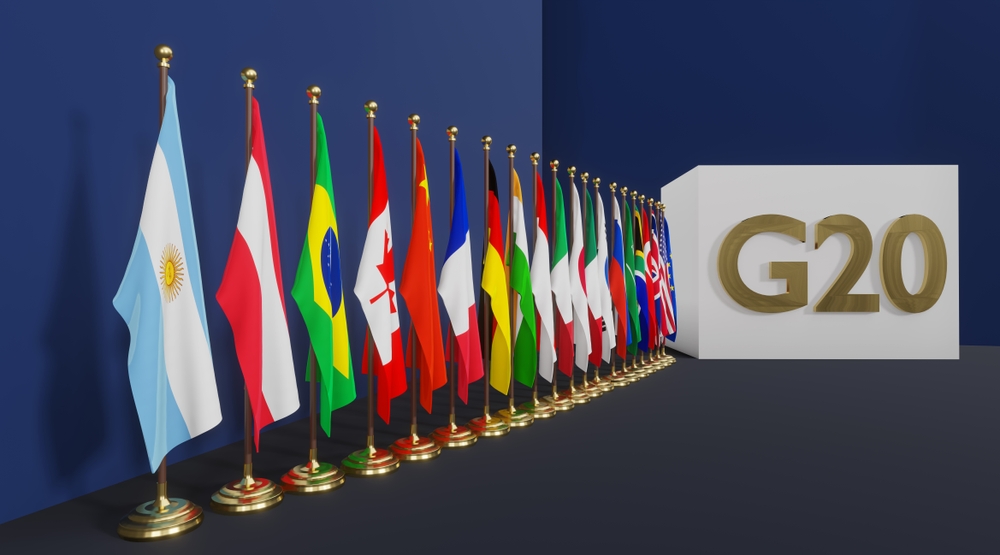
The G20 summit in Johannesburg this November will mark more than just another annual gathering of world leaders. It represents a historic inflection point: the first time an African nation has held the G20 presidency, and the first summit held on African soil. As South Africa prepares to welcome delegates to the continent’s economic powerhouse, the stakes could not be higher for Africa and the broader Global South.
For too long, African nations have been the objects of global economic governance rather than its architects. We’ve sat on the sidelines as others determined the rules of trade, set interest rates that devastated our currencies, and allocated development assistance that too often came with strings attached rather than solutions attached. The African Union’s admission as a permanent G20 member in 2023 was supposed to change this dynamic. But membership without meaningful influence is merely symbolic.
As the 2025 summit approaches, Africa must transform its physical presence in the G20 into substantive power. The continent must lead the Global South in demanding nothing less than a complete overhaul of how the world’s premier economic forum addresses our collective challenges.
The debt albatross
Let’s begin with the most pressing crisis: Africa’s unsustainable debt burden. The numbers are staggering. African countries are spending more on debt service than on healthcare or education combined. In 2024, the continent paid over $70 billion in external debt service—money that could have built schools, hospitals, and climate resilience infrastructure.
The G20’s Common Framework for Debt Treatments, launched with fanfare in 2020, has proven to be a Common Failure. Only four African countries—Chad, Ethiopia, Ghana, and Zambia—have applied to this framework, and even they have been mired in protracted negotiations that have delivered little relief. The framework’s requirement for simultaneous treatment from all creditors, including private bondholders and China, has created a coordination nightmare that leaves countries in limbo for years.
Africa must demand that the G20 scrap this failed approach and replace it with a comprehensive debt relief mechanism that recognizes the structural nature of our debt crisis. This isn’t about fiscal mismanagement—it’s about a global financial architecture that systematically disadvantages developing nations. When U.S. Federal Reserve interest rate hikes immediately translate into African children being pulled from school, we are looking at a system that is working exactly as designed: to extract wealth from the periphery to the center.
The G20 must establish an independent sovereign debt workout mechanism under the United Nations—not the G20 itself—that can impose binding decisions on all creditors. Such a mechanism should include automatic debt standstills when countries face external shocks, comprehensive debt restructuring that includes private creditors, and clear timelines that prevent negotiations from dragging on indefinitely.
Climate finance: Pay what you owe
The climate crisis represents another arena where Africa must move from supplication to demand. African nations have contributed less than 4% of historical greenhouse gas emissions, yet we face some of the most severe impacts. From cyclones in Mozambique to droughts in the Horn of Africa, our continent is already living in the climate future that wealthy nations fear.
The G20 must honor its long-standing commitment to provide $100 billion annually in climate finance to developing countries. But more importantly, it must acknowledge that this figure was always inadequate. Africa needs an estimated $2.8 trillion by 2030 to implement our nationally determined contributions under the Paris Agreement. Current climate finance flows to Africa amount to less than $20 billion annually—less than 1% of what is required.
Moreover, the climate finance that does arrive comes predominantly as loans, not grants. We are being asked to borrow money to solve a crisis we didn’t create. This is climate injustice compounded by climate usury.
Africa must demand that the G20 establish a new quantified goal for climate finance that reflects the actual needs of developing countries, with at least 50% allocated to adaptation. This finance must be primarily grant-based, and it must be additional to existing development assistance. The G20 should also implement a global carbon tax on the world’s biggest polluters, with revenues directed to the Green Climate Fund.
Reforming the global financial architecture
The institutions that govern global finance—particularly the International Monetary Fund and the World Bank—remain dominated by wealthy nations whose voting power bears no relation to current economic realities. The United States retains veto power over major IMF decisions while African countries, representing 1.4 billion people, have less combined voting weight than Belgium and the Netherlands.
This democratic deficit isn’t just unfair—it’s dangerous. It means that the institutions designed to provide global financial stability are structurally incapable of understanding or addressing African economic realities. When the IMF prescribes austerity for African countries while wealthy nations implement massive stimulus packages during crises, it’s not making neutral technical judgments—it’s enforcing a global hierarchy.
The G20 must commit to real reform of the Bretton Woods institutions. This includes:
Trade justice, not trade charity
Africa’s relationship with global trade remains fundamentally extractive. We export raw materials and import finished goods, capturing minimal value from our own natural wealth. The G20’s approach to African trade has focused on “aid for trade” rather than addressing the structural barriers that prevent African countries from moving up global value chains.
The G20 must take concrete steps to reform global trade rules that disadvantage African development. This includes:
The technology divide
As the world enters the age of artificial intelligence and digital transformation, Africa risks being left further behind. The G20’s digital agenda has focused on cybersecurity and data governance while ignoring the fundamental issue of digital infrastructure. Over 600 million Africans lack access to reliable electricity, let alone high-speed internet.
Africa must demand that the G20 establish a global technology transfer mechanism that ensures developing countries can access critical technologies on concessional terms. This includes renewable energy technology, medical innovations, and digital infrastructure. The G20 should also create a global fund for digital infrastructure that prioritizes universal electricity access as the foundation for digital inclusion.
A seat at every table
Finally, Africa must use its G20 platform to demand representation in all global governance structures. The African Union’s admission to the G20 is meaningless if Africa remains excluded from other critical decision-making bodies. We need:
From symbolism to substance
As South Africa prepares to host the G20 summit, we must recognize that this moment represents both opportunity and danger. The opportunity is to fundamentally reshape global economic governance to work for Africa rather than against us. The danger is that we will settle for symbolic victories—communiqués that promise much but deliver little, photo opportunities that mask continued marginalization.
Africa must approach this summit with clear demands and the willingness to walk away if they are not met. We should not confuse access with influence or presence with power. The G20 needs African participation more than Africa needs G20 membership. Without African cooperation, the G20 cannot claim to represent the global economy, nor can its decisions claim global legitimacy.
The Global South must present a united front in Johannesburg. Our demands are not radical—they are simply the minimum requirements for a functioning global economic system. We are not asking for charity or special treatment. We are demanding justice, fairness, and the opportunity to determine our own economic futures.
The world is at an inflection point. The unipolar moment has passed, and multipolarity is emerging. Africa must ensure that this new world order is not simply a redivision of the globe into new spheres of influence, but a genuine transformation toward equity and justice.
In Johannesburg this November, Africa must speak with one voice: We are not guests in your economic system. We are stakeholders who demand our rightful share of global economic governance. We are not problems to be solved but partners to be respected. We are not the Global South—we are the Global Majority, and we will no longer be ignored.
The G20 can either become the forum where the world finally addresses its structural inequalities, or it can become irrelevant as new institutions emerge that better reflect global realities. The choice is not Africa’s to make—it is the G20’s. But Africa must ensure that the cost of choosing wrong is clear to all.
The future of global economic governance will be determined in Johannesburg this November. Africa must ensure that future includes us not as supplicants but as equals.
Stay connected with IPRA’s quarterly newsletter featuring the latest news, book releases, and original content.
Copyright © 2025 Institute of Policy Research and Analysis. All rights reserved.