Why developing nations hold the key to the WTO’s digital future


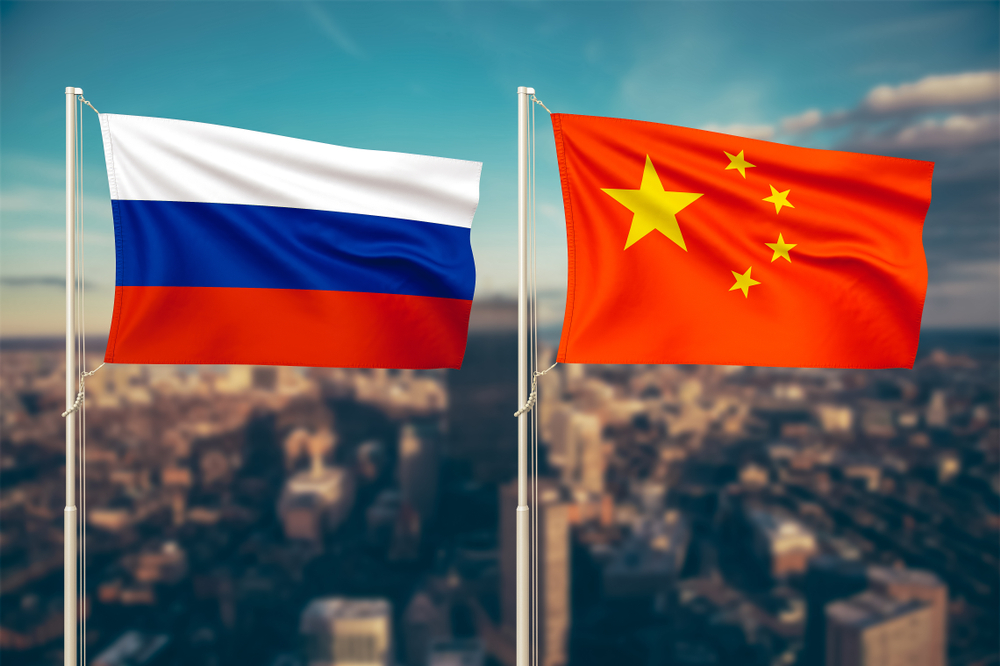
Africa is no longer a passive player in global geopolitics. Once relegated to the margins of international diplomacy, the continent is now at the center of a new foreign policy contest—this time between China, Russia, and the West. As African nations assert their agency and diversify partnerships, the traditional Western-dominated order is being challenged by alternative models of engagement. The result is a complex, multipolar landscape where Africa is not just a recipient of foreign influence but an active negotiator of its own future.
The Western Model: Conditionality and Declining Influence
For decades, Western engagement with Africa has been shaped by aid, trade, and governance conditionalities. The U.S. and EU have promoted democracy, human rights, and transparency as prerequisites for support. While these values are globally important, their application has often been perceived as paternalistic, fueling accusations of neo-colonialism.
Western influence is waning. The EU’s long-promised Euro-Mediterranean partnership, for instance, has yielded little integration and more instability since its inception in 1995. Meanwhile, the U.S. has focused heavily on short-term security interests, often at the expense of long-term development. This approach has alienated many African governments and populations, who increasingly view Western models as rigid and out of touch with local realities.
China’s Approach: Infrastructure, Investment, and Influence
China has emerged as Africa’s largest trading partner and a major source of infrastructure investment. Through the Belt and Road Initiative (BRI), China has financed roads, railways, ports, and energy projects across the continent. In 2024, China-Africa trade reached $254 billion, dwarfing both U.S. ($64 billion) and Russian ($18 billion) figures.
China’s appeal lies in its non-interference policy. Unlike the West, China does not demand political reforms or governance benchmarks. This transactional approach—often described as “win-win cooperation”—has resonated with many African leaders seeking rapid development without external scrutiny
.
However, critics argue that Chinese investments often come with hidden costs, including debt dependency and limited local job creation. While China’s model is attractive in the short term, questions remain about its long-term sustainability and the true beneficiaries of its projects.
Russia’s Strategy: Security, Sentiment, and Strategic Disruption
Russia’s engagement in Africa is more limited but strategically focused. It has positioned itself as a disruptor of Western influence, leveraging anti-colonial sentiment and offering military support to fragile regimes. Through arms deals, private military contractors (notably the Wagner Group, now rebranded as Africa Corps), and high-level diplomacy, Russia has carved out influence in countries like Mali, Burkina Faso, Sudan, and the Central African Republic.
Russia’s approach is opportunistic. It offers security without governance strings, aligning itself with authoritarian regimes and exploiting instability to gain access to resources and strategic footholds. While its trade volume with Africa is modest, its geopolitical impact is outsized, particularly in regions where Western influence is receding.
Yet, Russia’s model is not without risk. Its reliance on military engagement and opaque dealings has raised concerns about accountability, sovereignty erosion, and long-term instability.
Africa’s Response: Strategic Hedging and Agency
African nations are not passive actors in this geopolitical chess game. Many are leveraging the competition among global powers to extract better deals, diversify partnerships, and assert their sovereignty. This strategy—often termed “strategic hedging”—allows African governments to negotiate infrastructure funding from China, security cooperation from Russia, and governance support from the West, all while maintaining political autonomy.
Countries like South Africa, Ethiopia, and Nigeria are increasingly vocal about their right to choose partners based on national interests rather than ideological alignment. African leaders are also pushing for reforms in global governance, including demands for permanent representation on the UN Security Council.
However, this balancing act is delicate. Over-reliance on any one partner could lead to new forms of dependency. The challenge for African policymakers is to ensure that foreign engagements translate into sustainable development, job creation, and institutional capacity-building.
Conclusion: A New Playbook for a New Era
The era of singular dominance in Africa is over. The continent is now a theater of multipolar competition, where China offers infrastructure, Russia provides security, and the West promotes governance. Each model has its strengths and shortcomings, but none is a one-size-fits-all solution.
Africa’s new foreign policy playbook is defined by pragmatism, diversification, and assertiveness. It is a playbook that demands respect, mutual benefit, and long-term partnership. The question is no longer who will win Africa, but how African nations will shape their own destinies in a world of competing powers.
In this new era, the winners will be those who listen to African voices, respect African agency, and invest in African futures.
Stay connected with IPRA’s quarterly newsletter featuring the latest news, book releases, and original content.
Copyright © 2025 Institute of Policy Research and Analysis. All rights reserved.