Why developing nations hold the key to the WTO’s digital future


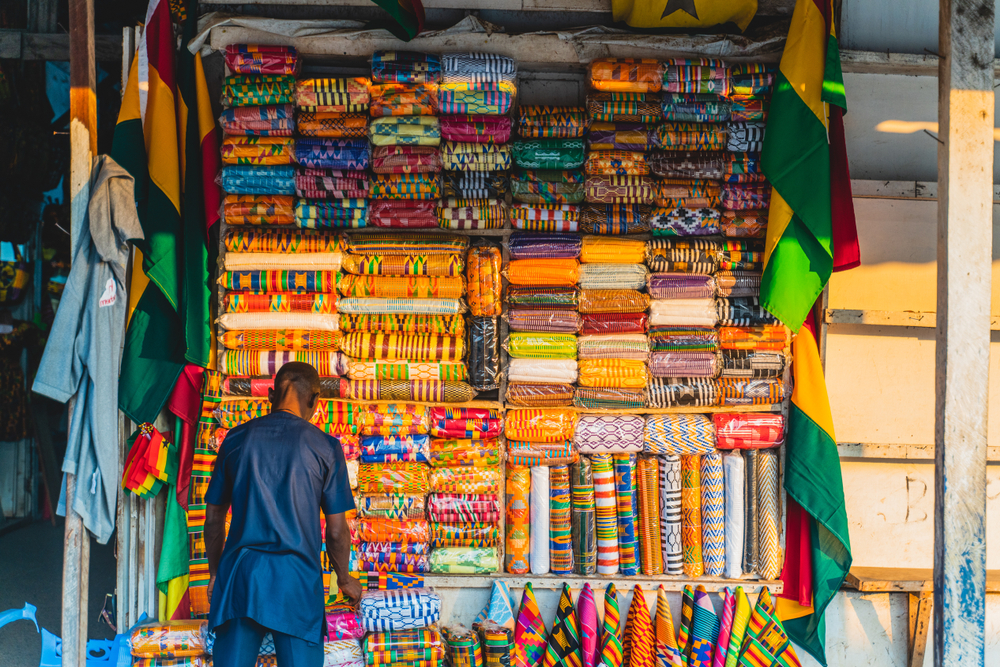
Africa’s informal sector already pays—just not always to the state, and rarely in ways that are fair, transparent, or growth-enhancing. Designing “pro-poor” revenue strategies is possible, but only if governments stop treating every street-vendor as a potential income-tax file and start asking who inside the informal economy actually has taxable capacity, what they already pay in fees and bribes, and which public services they receive in return.
Sub-Saharan Africa is the most informal region on earth: 25–65 % of GDP and up to 90 % of total employment sit outside the standard reach of value-added or income taxes.
With debt service absorbing more than 20 % of budget revenues in half of African countries, ministries of finance are under intense pressure to “broaden the base.” The politically convenient villain is the roadside tailor or market woman who allegedly “doesn’t pay tax.”
Yet the stylised facts are wrong.
In short, the average informal worker is not a free-rider; she is over-taxed in small, regressive instalments and under-served in public goods.
2.1 Mass-registration drives
Promise: Put every enterprise into the electronic tax register.
Reality: Between 60 % and 90 % of new micro-registrations never file a return; they merely clutter the system and waste administrative resources.
2.2 One-size-fits-all presumptive taxes
Promise: A simple turnover-based schedule replaces complex bookkeeping.
Reality: Flat or turnover-linked presumptive regimes are inherently regressive; a woman selling tomatoes on a 5% margin can pay the same rate as a wholesaler on 30% margins. Because assessments are often collected by third-party “revenue collectors” who pocket side-payments, the poorest operators face the highest effective burden
.
2.3 Formality-first conditionality
Promise: Pay tax → get a tax ID → access credit → grow.
Reality: Credit uptake among newly registered micro-firms is statistically insignificant; meanwhile extra compliance costs push some operators back into complete informality or out of business entirely.
Evidence from Ghana, Senegal, Uganda and Zimbabwe points to five design principles:
A cautious, model-based exercise for ten African economies shows that moving from blanket presumptive taxes to a capacity-sensitive schedule (zero rate for nano-enterprises, 5 % for high-turnover informal firms) could:
The simulation is conservative; it assumes only 50 % compliance among top-tier informal firms, well below the 70 % already achieved in Kigali markets.
The biggest obstacle is not technical; it is political.
Reformers therefore need allies outside finance ministries—local governments, informal worker associations, and, crucially, small-business voters who can punish extortionate tax practices at the ballot box.
Year 0–1 | Map & segment the base: combine satellite imagery, trade-association rolls and customs data to classify informal enterprises by turnover band and sector. |
Year 1–2 | Pilot a “service-linked levy” in two city markets; publicly display monthly revenue and expenditure on security, sanitation, toilet maintenance. |
Year 2–3 | Scrap national presumptive turnover tax for firms below the VAT threshold; instead let cities collect a unified local levy with a progressive band schedule. |
Year 3–4 | Introduce optional “informal VAT” scheme: traders who voluntarily register can buy from formal wholesalers VAT-free; this lowers input costs and integrates supply chains. |
Year 4–5 | Digital payments: channel all levies through mobile-money platforms that automatically record transactions, reducing the interface with potentially corrupt collectors. |
Africa can finance more of its future from internal sources, but only if it stops hunting the mythical “hidden goldmine” inside every street kiosk.
A fair informal-sector tax system is not about squeezing an extra dollar out of a mango seller; it is about recognising who already pays, eliminating the regressivity of myriad micro-levies, and building a visible social contract that ties tax to tangible services.
Done right, the informal sector becomes a bridge—rather than a barrier—to the continent’s fiscal self-reliance. Done wrong, and the poor will keep paying, just not to the state.
References
ICTD & ATAF, “Taxing Informal Economies: Practices, Challenges & Ways Forward,” 2025-06-11.
ScienceDirect, “The taxed informal economy: Fiscal burdens and inequality in Accra,” 2025-01-14.
ICTD, “ICTD launches new collaborative project exploring tax policy in Ghana’s informal sector,” 2025-02-28.
NIH, “Tax obsessions: Taxpayer registration and the ‘informal sector’ in sub-Saharan Africa,” 2017-06-30.
WIEGO, “Tax Justice and the Informal Economy,” 2021-08.
IJEPO, “Tax compliance and informal sector dynamics in Sub-Saharan Africa,” 2025-04-28.
IMF eLibrary, “The Informal Economy in Sub-Saharan Africa.”
Stay connected with IPRA’s quarterly newsletter featuring the latest news, book releases, and original content.
Copyright © 2025 Institute of Policy Research and Analysis. All rights reserved.